
New Windsor Previous Resident Sources
Previous residents are best traced as separate ownership and occupancy evidence. The town assessment rolls begin the current record trail, while land records provide recorded transfers. Directories, telephone books, and census schedules supply household context. The facts may overlap, but they should not be treated as identical. Start with the most recent parcel identifiers, then choose the source that covers the period in question.
| Source | Years covered | Where held | What it shows |
|---|---|---|---|
| Town assessment rolls | 2013-2026 | New Windsor Assessor | Annual assessed owner, situs, mailing address, class, value, and tax description |
| Orange County land books | Books A-450, 1703-1900; online cutoff not exposed | County Clerk, record room, and map room | Transfers, legal descriptions, parties, mortgages, and recorded dates |
| Newburgh directories used for New Windsor | 1856/57-1948 listed runs | New York State Library and Newburgh Free Library | Address, household, occupation, and neighborhood context |
| Federal census | Public images through 1950 under the 72-year rule | Federal genealogy sources and libraries | Household composition and residence at the census date |
| Orange probate images | 1787-1938 | FamilySearch and Surrogate records | Heirs, relationships, residence, property, and dates |
Use a deed chain for ownership, a directory for a printed household lead, and a census schedule for a household on its census date. Keeping those roles apart makes the address history more reliable.
New Windsor Current Parcel Clues
Freeze the present-day facts before going backward. The New Windsor assessment roll distinguishes the property location, known as the situs, from the current owner's mailing address. It can also provide class, school district, land and total values, exemptions, special districts, parcel size, grid coordinates, and tax description. The BAS portal is a tax-bill lead by bill number, tax-map number, property address, or owner name. No ZIP field was exposed there.
The New Windsor Assessor is the source for the posted assessment-roll route.
Keep the situs, mailing address, SBL, and legal description in an evidence ledger. A mailing address can be a post-office box or another location, while the situs identifies the parcel. That distinction prevents a correspondence field from being mistaken for an occupancy finding.
Orange County Previous Resident Gaps
The online cutoff for the current Orange County land chain was not exposed by the official gateway. When the web index or image access stops, use the County Clerk record room, map room, deed books, and historical indexes. The verified historical range includes grantor, grantee, and deed books A through 450 from 1703 to 1900. The FamilySearch New York land collection covers 1630-1975, though searchable fields and images vary.
Consult the Orange County historical documents resources before planning an older-deed search.
The County's historical resources identify a deeper document trail when a modern online result cannot establish an earlier transfer.
Trace New Windsor Prior Deeds
The backward ownership trail begins with the present parcel, not a name alone. Record the current assessed owner, situs, SBL or tax-map number, tax description, and any lot or block text. Check the parcel in GIS, then use the current owner's acquisition date or deed reference to enter the County Clerk index. A deed is the recorded instrument that can connect one owner to an earlier owner through its legal description.
- Save the assessor roll's current owner, situs, SBL, tax description, and lot or block information.
- Use the current owner's acquisition period to find that person as grantee in the County Clerk index.
- Inspect the purchase deed for the grantor, grantee, recording date, book or document reference, and legal description.
- Search the seller as an earlier grantee, using the same legal description or map reference.
- Repeat backward, moving to the record room, map room, deed books, or FamilySearch where online access stops.
- Grantor and grantee
- The grantor transfers an interest in the deed; the grantee receives it. In a backward chain, the seller can be searched as an earlier buyer.
- Chain of title
- The sequence of recorded transfers tied to the same property, traced through parties and the legal description.
- Legal description
- The lot, block, subdivision, metes-and-bounds, or map wording that identifies land more reliably than a changing street address.
New Windsor Directory Census Flow
Use the household trail beside the deed trail, not in place of it. Start with the most useful Newburgh or New Windsor directory date, record the address and all printed household information, then find the closest public federal census schedule. Federal census images are generally released under the 72-year rule and are public through 1950. A directory may suggest that a household occupied an address between census dates; the census then provides a dated household snapshot.
- Write down the directory year, printed address, name spelling, and household notation.
- Search the surname and address separately, especially for years before the 1918 street-search change.
- Compare the directory date with the closest public census year.
- Mark whether a source supports occupant, assessed owner, mailing correspondent, heir, or neighbor.
- Use the next directory, a deed, or probate material to test a move or transfer.
Explore the New York State Archives genealogy resources for state-level historical research paths.
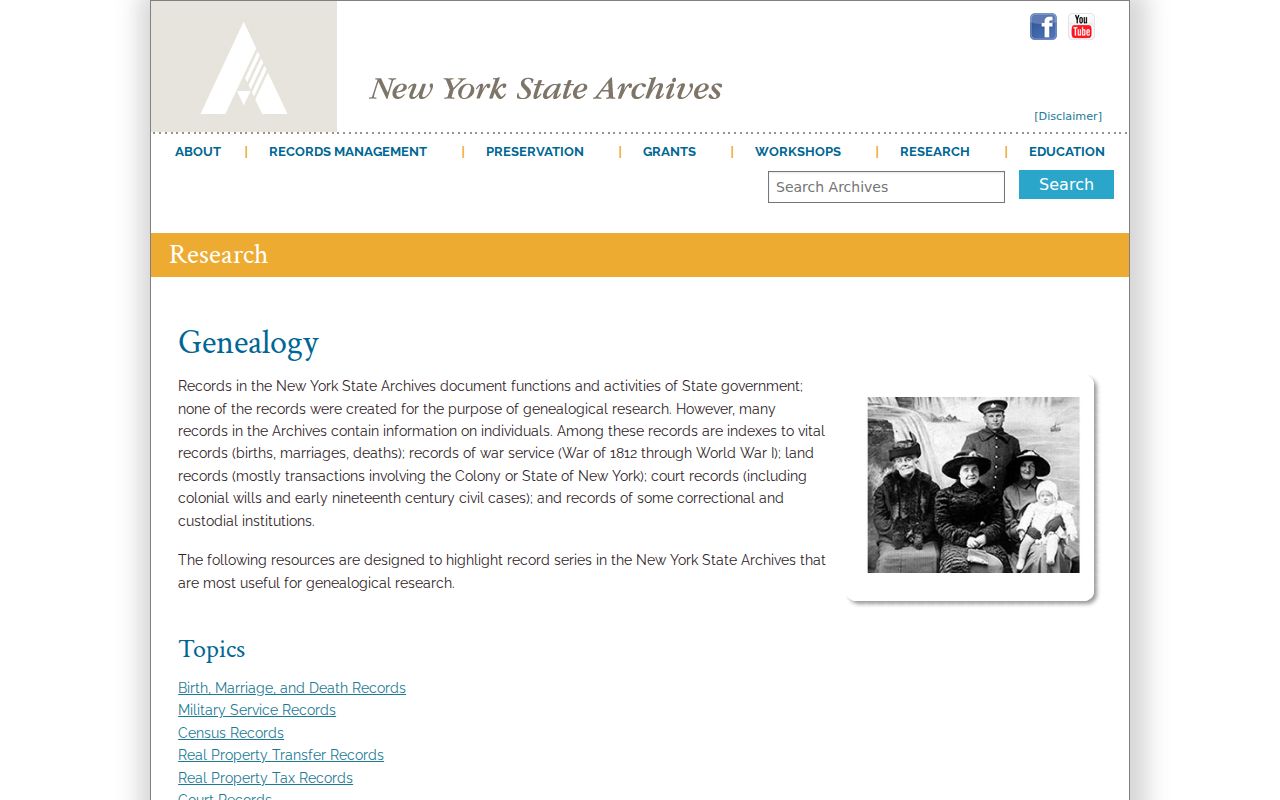
State archival guidance can complement a local directory or deed reference when a family trail crosses jurisdictions or survives in a different record group.
New Windsor Past Household Records
Ownership is only one layer. Newburgh directories used for New Windsor can provide address, household, occupation, and neighborhood context; early volumes are surname-alphabetical, while the Historical Society reports that 1918 and later volumes may be searched by street address and surname. Telephone books can give a subscriber and address lead, not proof of ownership or current occupancy. The collections themselves are described in the New Windsor city directory collections.
Pair a directory year with the public federal census schedule that is closest in time. The census can show household relationships and residence at its date. Then check probate, obituaries, cemetery material, or the next directory for evidence of a departure, death, or inheritance. Orange probate records are browse images from 1787-1938, so a name search may need to be supported by a later deed or known death information.
Lawful use. Use New Windsor previous-resident records for family history, estate questions, and property history. Do not use an historic record trail to track, harass, or harm a living person.
New Windsor Historian Past Records
The Town Historian offers historical-property assistance and referrals by appointment. The collection includes about 500 volumes as well as deeds, wills, genealogical data, census and assessment material, roads and maps, legal records, school ledgers, family papers, and diaries. It is the local fallback when the later directory and deed chain does not explain an old place name, road, or property reference.
Read the 1763 New Windsor town-record transcript for an early example.
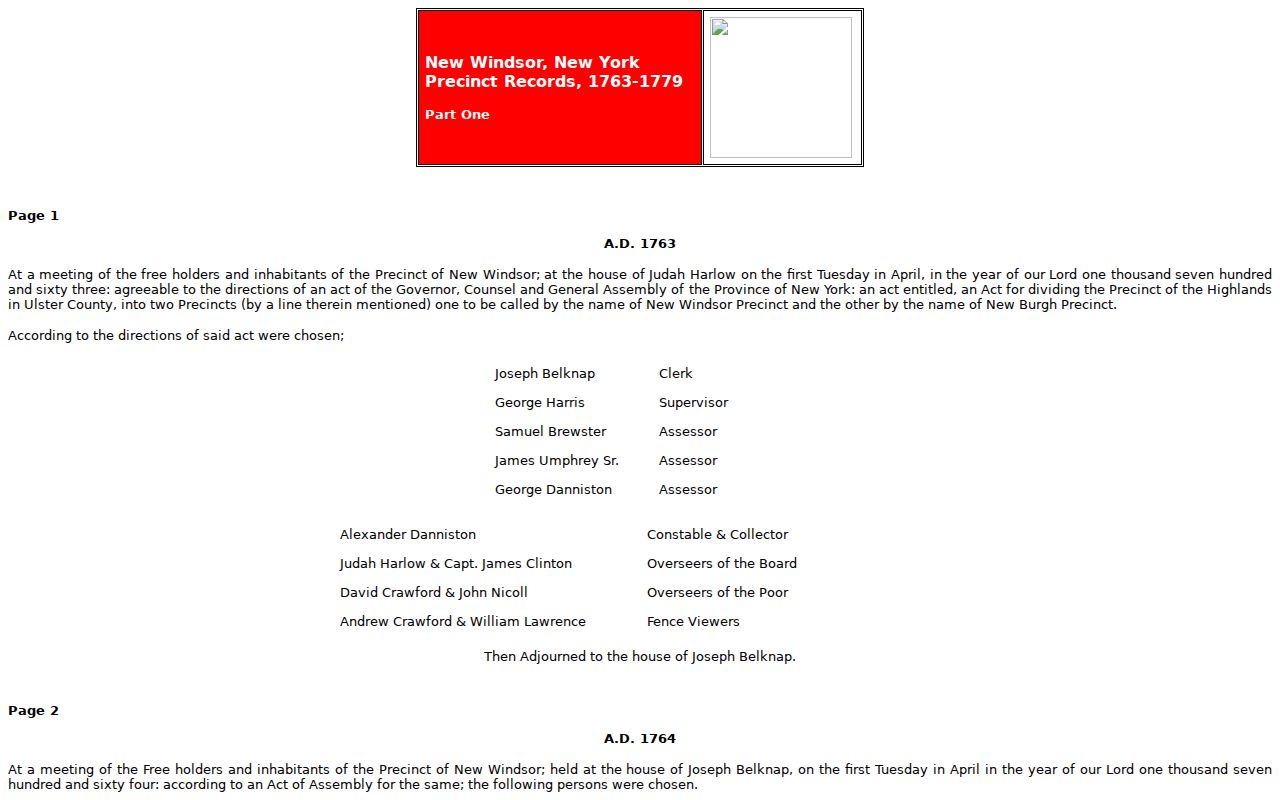
The first transcript begins with a meeting at Judah Harlow's house and identifies town officers, showing why the collection can add local context long before the available city directories.
Use the Town Historian historical-records page for the indexed Minute Book 1763-96, Book II 1792-1828, early census, church, road, school, and cemetery material.
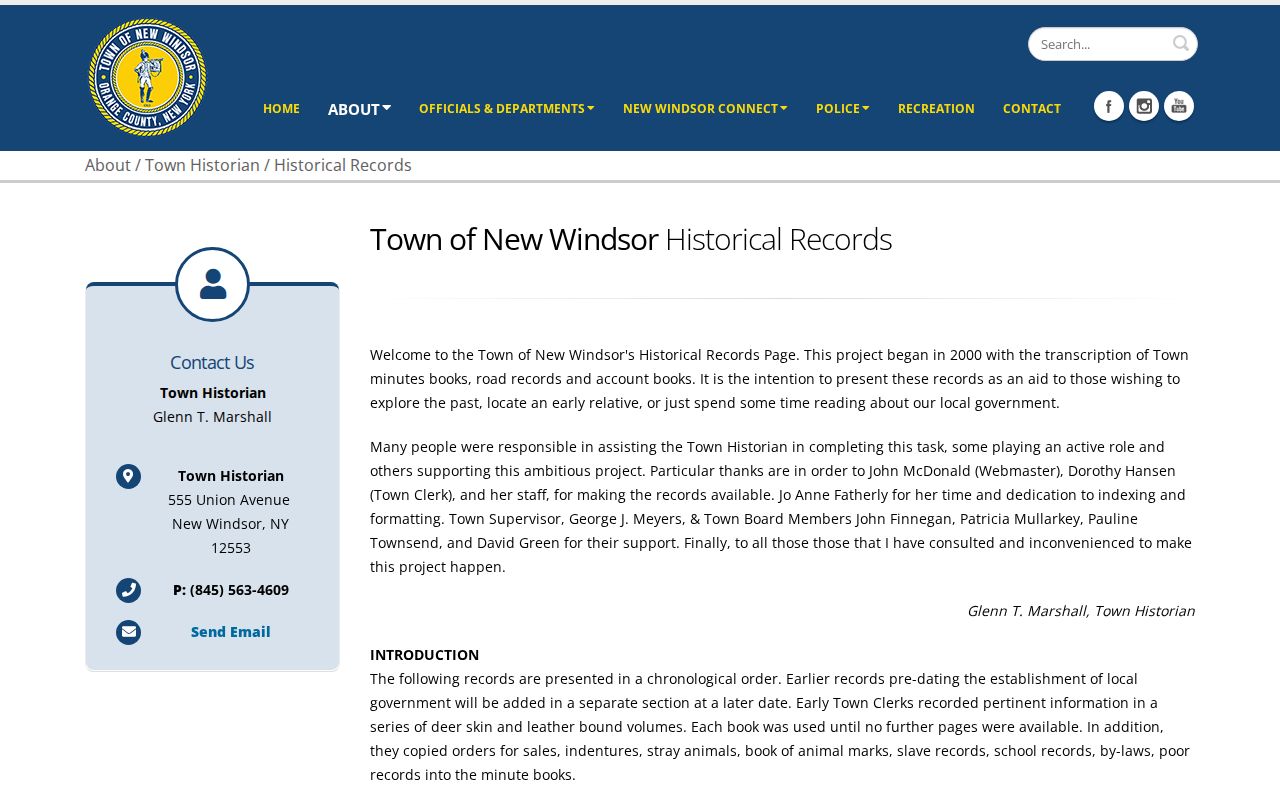
The transcription project preserves spelling, grammar, cross-outs, and original quirks, so preserve its page references rather than silently modernizing a name.
New Windsor Address History Limits
No official source located a dated New Windsor street-renumbering, street-renaming, annexation-readdressing, or ZIP realignment project. Do not assume a modern street number appeared in an older record. Little Britain, Rock Tavern, and Vails Gate are local place-name variants that may appear in historical context. Bridge an uncertain address with the deed's legal description, lot or block, map reference, historic directory year, and Town Historian assistance.
The Newburgh Historical Society recommends combining deeds, building-department history, directories, census, and local vital material for a house history. Its guidance also notes the pre-1918 surname-only directory limit and the later street-address search. A property identity can be tested across those sources without claiming an unverified address continuity.
Note: A map, an assessor row, a directory listing, and a deed each describe a different part of the same historical address question.
New Windsor Sanborn Map Limits
Sanborn fire-insurance maps can show a building footprint, use, materials, and street context where coverage exists. The research did not confirm a New Windsor-specific Sanborn run, so no map date or local coverage should be assumed. A Newburgh sheet or county map should be used only after confirming that it actually depicts the address under study.
Use the Library of Congress Sanborn search guide to understand how to locate and verify a map series.
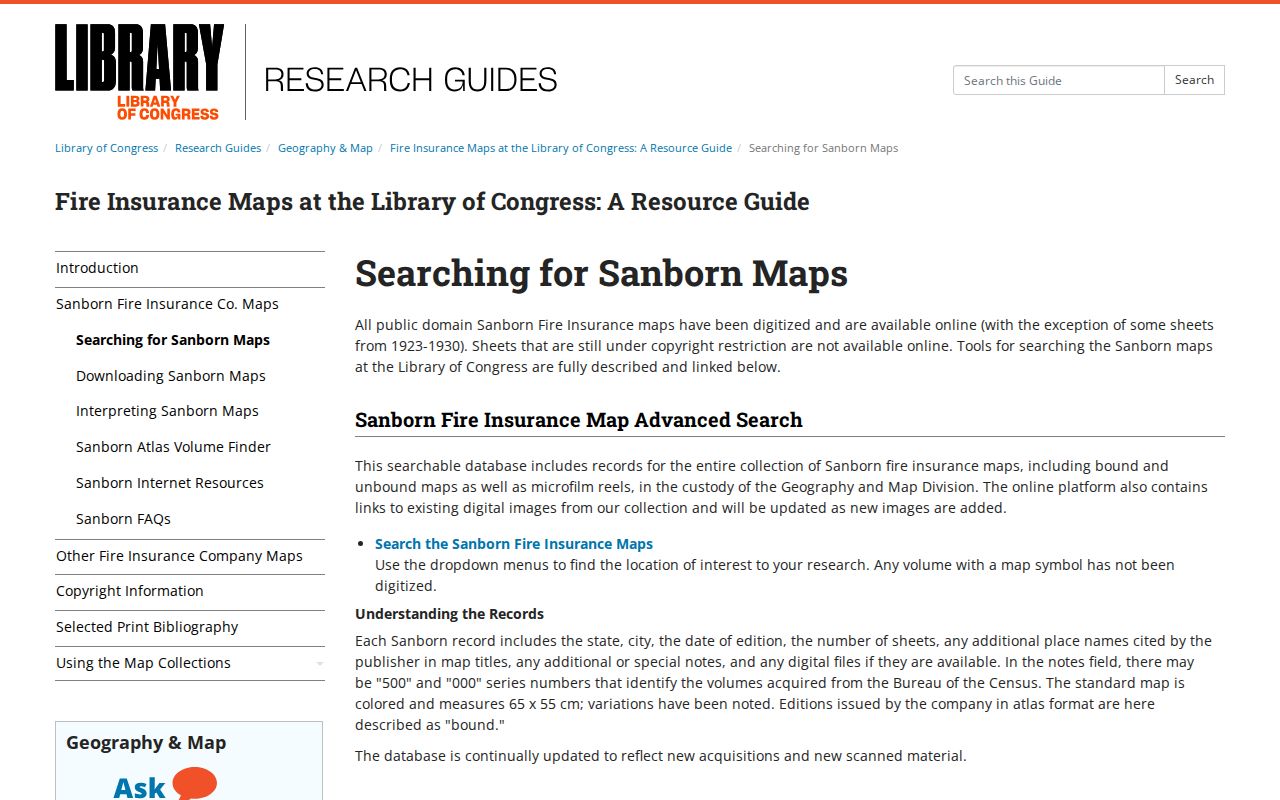
The guide is a research method source, not evidence that a digitized Sanborn sheet exists for every older New Windsor address.
New Windsor Previous Resident Ledger
Keep an evidence ledger for every address year: the source title, page or reel, address and name exactly as printed, record date, and the fact the item supports. Mark occupant, assessed owner, mailing correspondent, heir, and neighbor as separate roles. This makes a later request to the County Clerk or Town Historian precise when a needed scan is unavailable.
A carefully limited conclusion is often the strongest one. For example, an assessment roll may name an assessed owner, while a directory names a printed household at that address in a particular year. Neither statement should silently become a claim about another date.