
New Windsor Directory Holdings
New Windsor research relies on nearby Newburgh collections as well as town material. The Newburgh Free Library Local History Resource Center reports city directories back to the 1860s and telephone directories from the 1930s through the early 2000s. Its local-history holdings also include church and family records, cemetery material, maps, photographs, yearbooks, and a catalog of about 75,000 items. A title that says Newburgh is not automatically a New Windsor volume, so check each book's stated geographic coverage before treating a listing as local evidence.
| Collection | Years | Where held | Access |
|---|---|---|---|
| Newburgh directory run | 1856/57 to 1948, with listed gaps | New York State Library and Newburgh Free Library | Microfilm, fiche, and local-history shelf |
| Telephone directories | 1930s to early 2000s; NYSL examples 1940/41 and 1950/51 | Newburgh Free Library and New York State Library | Repository access |
| Newburgh and New Windsor leads | 1951, 1959, and 1960 | Digitized DistantCousin/MyHeritage collection | Free search; scans or account access may require subscription |
| Newburgh/Beacon catalog leads | 1938/39 through 1952/54, as cataloged | Gale/ACPL catalog lead | Licensed collection or catalog confirmation |
These are overlapping research paths, not one continuous published run. The shelf can fill gaps that a digitized search misses, while an online result can identify a year worth requesting from the library.
New Windsor Archive Shelf
The library is more than a place to locate one printed volume. Its local-history room groups directories with newspapers, yearbooks, church records, family histories, maps, photographs, and cemetery records. Those companions help resolve a surname that appears in an old Newburgh directory without a clear New Windsor connection. A telephone listing is a useful address lead, but it is not proof that a person owned property or lived there at a later date.
See the City of Newburgh Digital Collection before planning a visit.
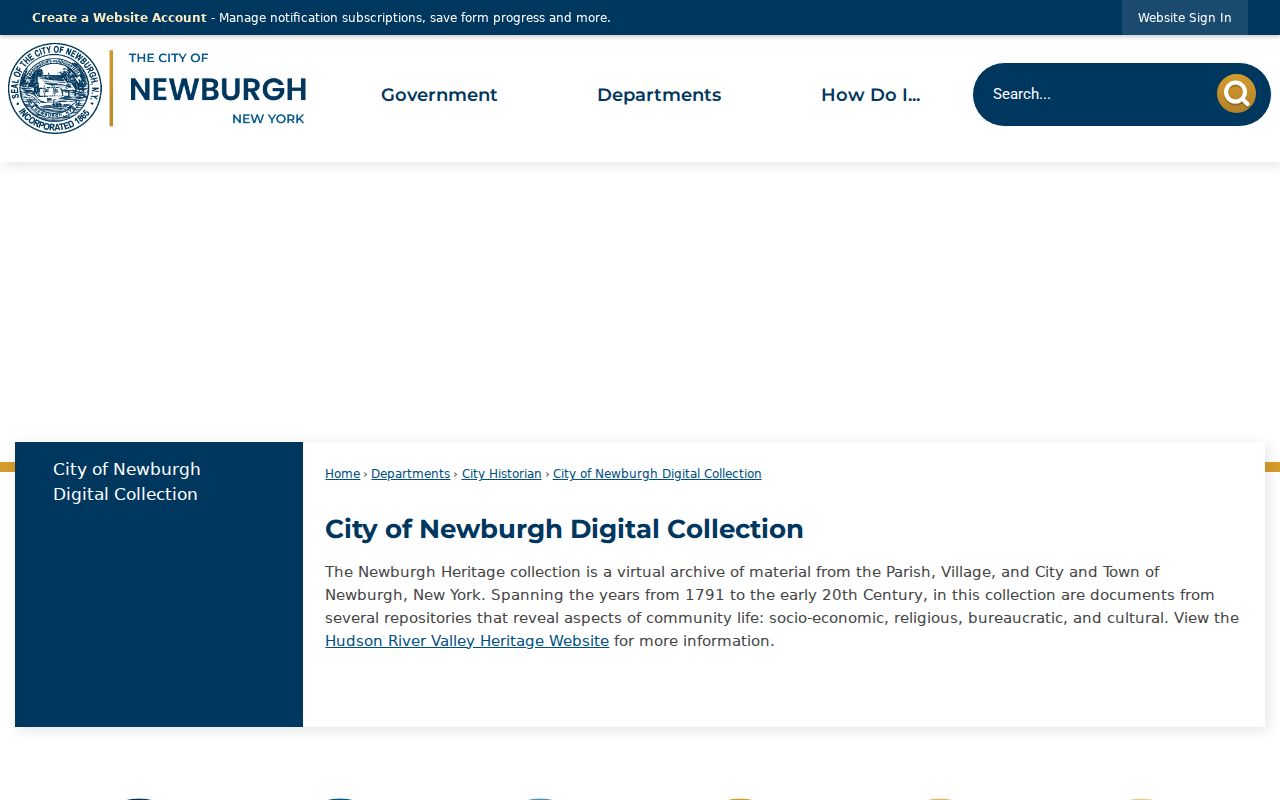
The online collection reaches parish, village, city, and town institutional records from 1791 into the early twentieth century, which can add context around a directory year.
Note: A directory title, a postal place name, and the town boundary can differ, so preserve the volume title and page reference in research notes.
New Windsor Directory Microfilm Years
The New York State Library city-directory list gives the clearest verified Newburgh sequence for New Windsor work. It lists 1856/57, 1858-59, 1860/61 on fiche, 1864/65, 1872/73, 1874/75, 1879-84, 1887, 1889, 1898-99, 1901-31, 1937-42/43, and 1946-48. The sequence has gaps. It should guide a search, not create an assumption that every annual issue survives or includes the whole town.
Consult the New York State Library listing for the documented microfilm and fiche runs.
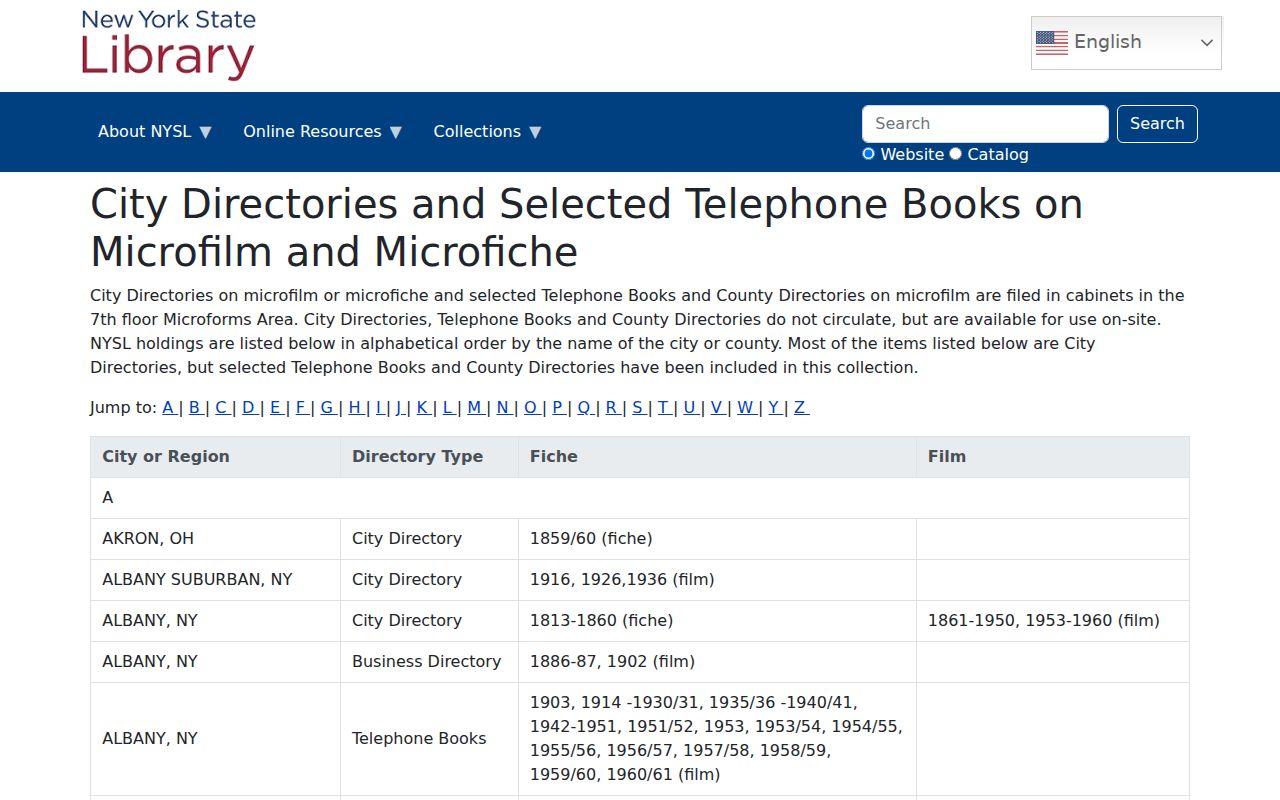
The listing also identifies Newburgh telephone-book examples for 1940/41 and 1950/51, useful only as subscriber and address leads.
- 1856/57 begins the listed Newburgh directory sequence.
- 1901-31 forms a substantial later block in the State Library list.
- 1937-42/43 and 1946-48 continue the listed printed runs after that break.
- 1940/41 and 1950/51 are documented telephone-book examples, not a substitute for the printed directories.
New Windsor Digitized Directories
Online searching can provide fast leads, but it does not replace the local shelf. The DistantCousin/MyHeritage collection advertises 25,468 directories dated 1860-1960. Its search is free, while scans and account access may require a subscription. Search results surfaced a New Windsor city directory lead for 1951 and Newburgh and New Windsor directories in 1959 and 1960. Treat each result as a lead until the scan and its coverage can be inspected.
Open the digitized city-directory collection to test a surname and year.
A digital result can narrow a request to one year, then a library or state-held copy can confirm what the printed entry actually says.
Read New Windsor Directory Entries
The Newburgh Historical Society research guide explains a key local change. Volumes before 1918 are alphabetical by surname and have no address cross-index. Volumes from 1918 onward may be searched by street address as well as surname. A printed entry can supply a surname and given name, spouse or household notation where printed, occupation, marital status, an address, and legal-age household residents. The exact elements vary by volume.
| Printed name | The surname and given name provide the starting spelling for other records. |
|---|---|
| Household notation | A spouse or household relationship may appear when the volume prints it. |
| Occupation and status | Occupation and marital status can distinguish same-name people, if printed. |
| Address | The address links a listing to a street search, census, deed, or assessment record. |
| Legal-age residents | Some entries identify legal-age household residents, not a complete modern household roster. |
Review the Historical Society's directory guidance before interpreting a volume.
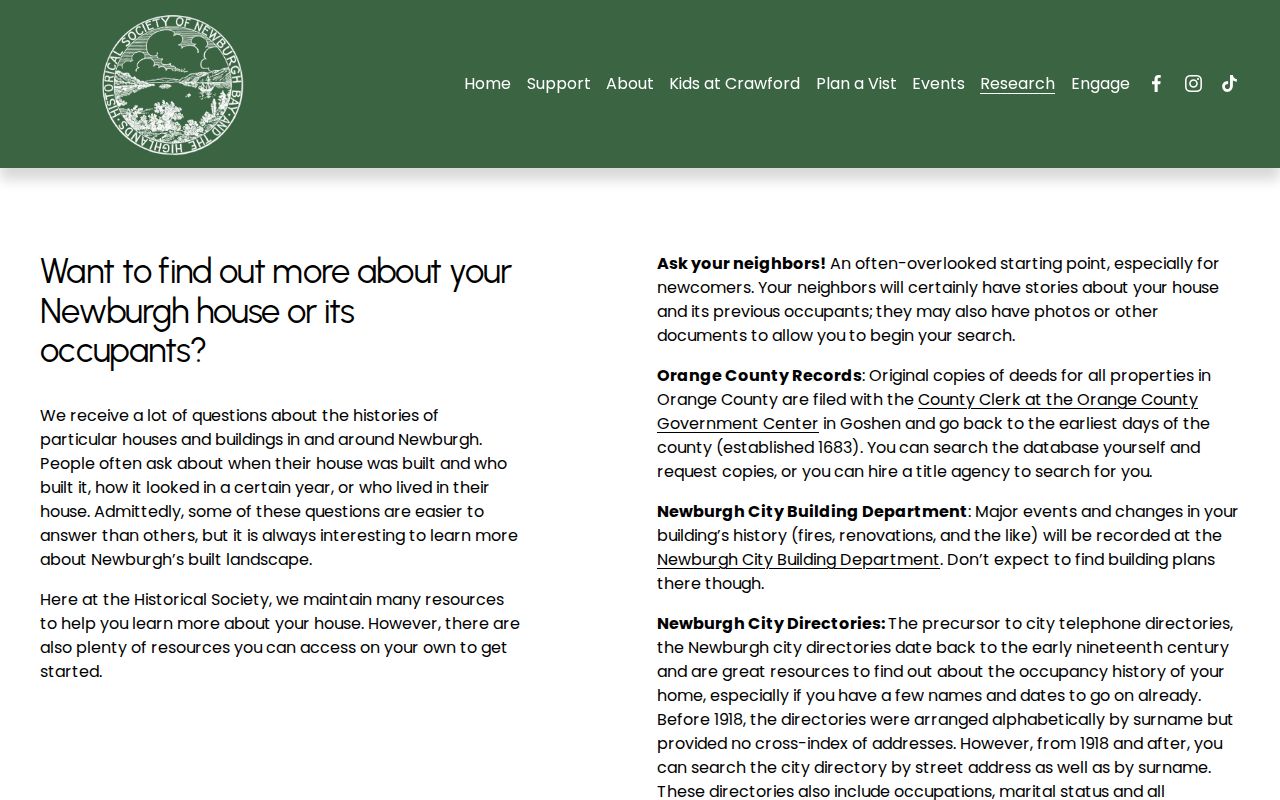
The guide supports the pre-1918 surname limitation and the later street-and-surname approach, rather than a claim that every volume has the same layout.
- Criss-cross directory
- A directory arranged by address rather than surname. Confirm that a particular Newburgh or New Windsor volume includes one before relying on it.
- Householder entry
- A printed listing that identifies a household connection, not a deed or a present-occupancy finding.
- Abbreviation key
- A guide some volumes provide for shortened terms. The inspected sources did not establish a key for these runs, so read the volume before expanding an abbreviation.
New Windsor Street Search Shift
The 1918 divide changes the practical search method. For an earlier Newburgh directory, begin with a surname and check possible spellings. For a 1918 or later volume, try the street address and the surname separately. This matters when a family used initials, when a name was printed with an unexpected spelling, or when the researcher only knows the address.
Do not turn a directory's address into proof of ownership. A deed documents a recorded transfer, and a tax roll identifies assessed ownership. The historical listing is best used as occupancy or household evidence for the directory year.
Note: Preserve the address exactly as printed, because a later parcel or census search may use a different road name or number.
Trace New Windsor Directory Households
Follow one household across the available directory volumes, but keep each record type in its own lane. Start with a later known address, write down the printed name, household notation, occupation, and nearby addresses, then move backward through the available years. Search the surname and address separately. Pair the directory dates with federal census years, which generally become public after the 72-year release period, and use deeds or assessment rolls to test a property connection.
- Find a confirmed surname or address in an available directory year.
- Record the entry exactly, including the date and page or image reference.
- Move one available directory year at a time and note address or household changes.
- Compare a directory year with the appropriate public federal census schedule.
- Use a deed, assessment roll, obituary, cemetery record, or probate file only for the fact that source can support.
For a current parcel or street trail, use the New Windsor street directory lookup rather than treating a historic book as a current-address tool.
New Windsor Historian Records
Town Historian Glenn T. Marshall keeps roughly 500 volumes at 555 Union Avenue and provides research assistance, referrals, and historical-property help by appointment. The holdings include deeds, wills, genealogical data, census and assessment material, roads and maps, school ledgers, family papers, and diaries. The historian's online records include an indexed Minute Book for 1763-96 and Book II for 1792-1828, making them a useful companion where the Newburgh directory runs begin too late.
Visit the Town Historian historical-records collection for the transcribed material.
The transcription work preserves original spelling, grammar, cross-outs, and quirks, with brackets for corrections or unreadable text. Its first 1763 transcript records a meeting at Judah Harlow's house, an unusually direct look at the town's earliest administrative recordkeeping.
New Windsor Directory Evidence Limits
A historical directory can show a printed lead, not a complete account of a person or property. Someone may have moved, died, been omitted, or appeared under a variant name. Check library newspapers or obituary resources, probate material, church and cemetery records, and the next available directory when a listing disappears. Orange probate images cover 1787-1938, but the collection is browse-only and needs careful context.
For earlier town material, the historian's records may be stronger than a directory search. For later household and address questions, verify the specific year, volume, and geographic coverage before drawing a conclusion.
New Windsor Directory Companion Sources
Use a directory entry as the middle of a record trail, not the finish. The Newburgh Free Library groups directory research with church and family records, cemetery material, maps, photographs, postcards, pamphlets, clippings, and yearbooks. A map can help identify the printed street. A yearbook can support a school-era connection. A church or cemetery record can provide a family relationship or death clue. Each source has its own date and coverage, so record both the item and the fact it supports.
The Newburgh Historical Society's house-history approach combines deeds, building history, directories, census, and local vital material. When a household disappears, compare the next directory with a newspaper or obituary path, then probate or a later deed if a transfer is suspected. That sequence preserves the useful distinction between a printed household listing, a reported death, and a recorded land transfer.